
Stap 2 / 4 — Pulse-methode
Het ritme zingen en je muzikale gehoor ontwikkelen
Van lichaam naar stem
Nadat je hebt geleerd de puls door beweging te voelen, volgt vanzelf een nieuwe stap: geef het ritme een stem.
Het lichaam laat je de tijd voelen, lopen stabiliseert de puls en handklappen geven het ritme vorm. Zingen voegt een nieuwe dimensie toe: het verbindt wat je voelt met wat je hoort.
De stem is ons eerste instrument. Voordat je een melodie op een instrument speelt, moet je die innerlijk kunnen horen en naspelen.
In de Pulse-methode wordt zingen een brug tussen het ritme dat je met je lichaam voelt en de muziek die je op een instrument speelt.
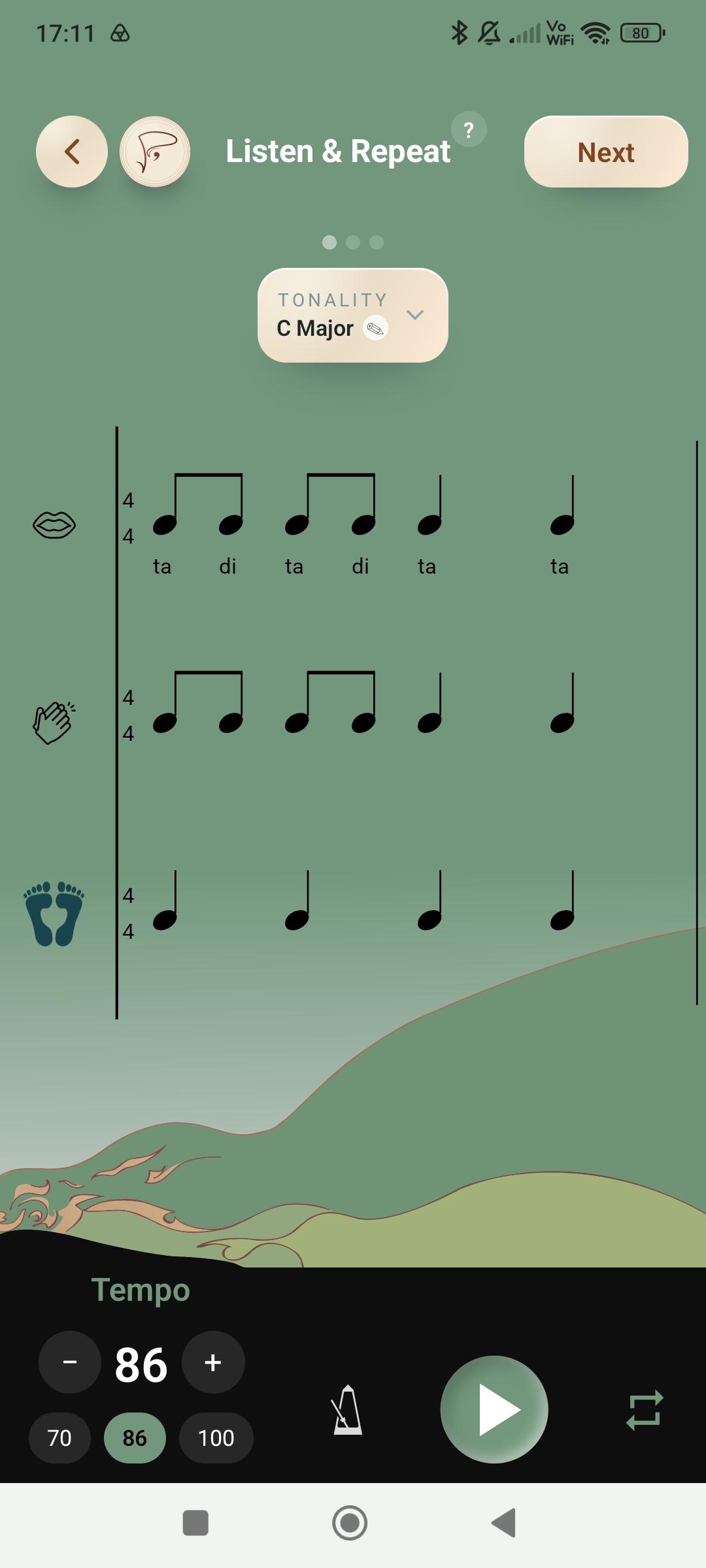
Op mobiel open /pulse/download voor een directe store-redirect.
Waarom zingen?
De stem maakt een directe verbinding tussen oor en beweging
Wanneer een muzikant een melodie op zijn instrument leert, zoekt hij vaak meteen de juiste noten met zijn vingers. Toch komt vóór de beweging een essentiële stap: de muziek innerlijk kunnen horen.
Zingen helpt deze verbinding tussen oor en lichaam te ontwikkelen.
Een melodie die je kunt zingen, is al deels begrepen en onthouden. De muzikant zoekt niet langer willekeurig naar klanken op zijn instrument: hij weet wat hij wil voortbrengen.
Zingen ontwikkelt zo verschillende fundamentele vaardigheden:
- het muzikale geheugen;
- de precisie van het gehoor;
- het vermogen om geluiden te anticiperen;
- het begrip van melodische bewegingen.
Als een muzikale frase gezongen kan worden, wordt die veel gemakkelijker terug te vinden en te spelen.
Zingen in Pulse: het ritme en de toonhoogten voelen
In Pulse beperkt zingen zich niet tot ritmisch werk. Het doel is echt de melodie te zingen, met haar ritmes en toonhoogten.
De muzikant werkt dus aan twee complementaire dimensies:
Het ritme
Ritmische lettergrepen geven een eenvoudige taal aan verschillende duurwaarden.
In het eerste volume gebruiken de oefeningen vooral de lettergrepen:
- ta op de tellen;
- di voor de tussentijden.
Ze laten je ritmische bewegingen voelen en benoemen zonder meteen via theoretische notatie te gaan.
Ritme wordt iets dat je kunt horen, zeggen en voelen.
De toonhoogten
Tegelijkertijd wordt de melodie gezongen met haar echte noten.
De muzikant leert zo twee essentiële informatiebronnen te coördineren:
- wanneer het geluid moet komen;
- welke toonhoogte het moet hebben.
Deze koppeling tussen ritme en melodie is fundamenteel in elke muzikale praktijk. Een muzikale frase is niet alleen een reeks noten: het is beweging in de tijd.
Waarom ritmische lettergrepen gebruiken?
Ritmische lettergrepen geven het ritme een taal.
Nog voordat je een partituur leest of over ritmische waarden praat, kan de muzikant voelen en uitdrukken wat hij hoort.
Zeggen:
« ta-di ta »
maakt een ritmische beweging eenvoudig, direct en muzikaal hoorbaar. Deze lettergrepen ondersteunen verschillende aspecten van het leren:
- een ritme onthouden;
- een temporele organisatie herkennen;
- een ritmisch idee overbrengen;
- luisteren en beweging beter koppelen.
Ze vervangen het muziek lezen niet, maar vormen een brug tussen sensatie en begrip.
Waarom blijven lopen en klappen?
Wanneer je zingen toevoegt, lijkt het soms eenvoudiger de lichaamsbewegingen te stoppen om je alleen op de stem te richten.
Juist het behouden van deze elementen maakt de oefening bijzonder effectief.
In muzikale praktijk zijn ritme, melodie en beweging nooit volledig gescheiden.
In Pulse-oefeningen:
- houdt lopen de puls in stand en houdt het lichaam verbonden met de tijd;
- geven handklappen de ritmische structuur vorm;
- ontwikkelt de stem het gehoor en de melodie.
Deze coördinatie leert de muzikant meerdere dingen tegelijk te doen, zoals hij dat later op een instrument of in een groep moet doen.
Het lichaam blijft dus een referentie, zelfs wanneer de aandacht naar de melodie verschuift.
Luisteren en herhalen met de stem
Zoals bij lichaamspercussie-oefeningen begint het werk altijd met luisteren.
Het doel is niet simpelweg mee te zingen met de app, maar echt innerlijk luisteren te ontwikkelen.
Het proces volgt verschillende stappen:
Luisteren
De muzikant ontdekt de melodie, haar ritme, bewegingen en structuur.
Voordat hij zingt, neemt hij de tijd om te horen.
Voelen
De melodie begint een innerlijke vorm te krijgen. Ritme, toonhoogten en bewegingen worden geleidelijk vertrouwder.
Zingen
De stem vertaalt wat het oor heeft begrepen.
Het doel is niet meteen een perfecte uitvoering te geven, maar geleidelijk dichter te komen bij wat je hoort.
Vergelijken en bijstellen
Naar het model luisteren helpt verschillen te herkennen en je waarneming geleidelijk te verfijnen.
Elke herhaling ontwikkelt het gehoor.
Verder gaan: de noten benoemen
Voor muzikanten die het gehoortraining willen verdiepen, is een extra stap mogelijk: proberen de noten van de melodie te identificeren.
In Pulse toont de partituur alleen de ritmische dimensie. Toonhoogten worden niet genoteerd om actief luisteren aan te moedigen.
De muzikant kan dan proberen:
- naar de melodie te luisteren;
- de noten op het gehoor te vinden;
- ze te zingen met hun naam;
- daarna te controleren met zijn instrument.
Deze oefening is een eerste benadering van spelen op het gehoor.
Het ontwikkelt geleidelijk:
- het relatieve gehoor;
- het herkennen van intervallen;
- bewustzijn van melodische bewegingen;
- het vermogen een melodie zonder partituur terug te vinden.
Veelvoorkomende fouten
Alleen op de noten focussen
Het komt vaak voor dat men vooral de juiste toonhoogten wil zingen en het ritme vergeet.
Toch is een melodie onlosmakelijk verbonden met haar plaats in de tijd. De puls moet in het lichaam blijven leven.
Stoppen met lopen om beter te zingen
Wanneer zingen moeilijker wordt, kan de reflex zijn het lopen te verliezen.
Maar juist op die momenten is het lichaam het nuttigst: het houdt stabiliteit terwijl de stem werkt.
Meteen perfectie zoeken
Het eerste doel is luisteren ontwikkelen.
Een licht vals note of een imperfect ritme zijn informatie waarmee het brein leert.
Te snel de noten willen vinden
Noten identificeren is een gevorderde stap. Voordat je een klank benoemt, moet je eerst leren hem te horen.
Oefentips
Een paar regelmatige minuten zijn vaak effectiever dan één lange sessie af en toe.
Om vooruit te gaan:
- meerdere keren luisteren voordat je zingt;
- een natuurlijke stap houden;
- langzaam beginnen;
- moeilijke passages apart herhalen;
- proberen te zingen zonder de app om te controleren wat echt is onthouden.
Het doel is niet alleen een oefening te halen, maar een aandachtiger en zelfstandiger gehoor te ontwikkelen.
Wat deze stap voorbereidt
Zingen is een essentiële stap tussen lichamelijk voelen en instrumentaal spelen.
Wanneer de muzikant een ritme kan voelen en een melodie kan zingen, heeft hij al een innerlijke voorstelling van de muziek. Het instrument wordt dan een middel om iets uit te drukken dat al in het oor bestaat.
Deze stap bereidt van nature voor op:
Spelen op het gehoor
Een melodie terugvinden wordt eenvoudiger wanneer die al innerlijk gehoord is.
Improvisatie
Een muzikant die melodische bewegingen hoort, kan vrijer creëren en een eigen taal ontwikkelen.
Interpretatie
Een sterkere verbinding tussen oor, lichaam en instrument maakt spelen met meer precisie en expressie mogelijk.
Wat deze oefening wil ontwikkelen
Wanneer je deze oefeningen zingt, werk je niet alleen aan een melodie.
Je ontwikkelt essentiële vaardigheden voor elke muzikale praktijk:
- het oor aan het lichaam koppelen;
- een muzikale frase onthouden;
- de relatie tussen ritme en melodie voelen;
- geluiden anticiperen;
- het relatieve gehoor ontwikkelen;
- de overgang naar het instrument voorbereiden.
Zingen verandert gehoord muziek in innerlijke muziek.
Dit vermogen om te horen vóór je speelt maakt het daarna mogelijk vrijer, preciezer en creatiever te spelen.