第 2 步 — Pulse 方法
唱出节奏,培养音乐听觉
从身体到声音
After learning to feel the pulse through movement, the next step comes naturally: give rhythm a voice.
The body feels time, walking steadies the pulse, and hand claps express rhythm. Singing connects what you feel with what you hear.
The voice is our first instrument. Before playing a melody, you need to hear it inwardly and reproduce it.
In the Pulse method, singing becomes a bridge between rhythm felt in the body and music played on an instrument.

在手机上打开 /pulse/download 可直接跳转应用商店。
为什么要唱?
The voice creates a direct link between ear and gesture
Singing requires precise listening.
The voice turns a heard rhythm into immediate action.
It makes the pulse and its subdivisions clearer.
It helps you anticipate what comes next instead of only reacting.
- hear a phrase before playing it
- keep a steady pulse
- recognise beat subdivisions
- remember rhythms for longer
Singing requires precise listening.
Singing in Pulse
In the Pulse method, singing becomes a bridge between rhythm felt in the body and music played on an instrument.
Singing requires precise listening.
唱出节奏
The voice turns a heard rhythm into immediate action.
It makes the pulse and its subdivisions clearer.
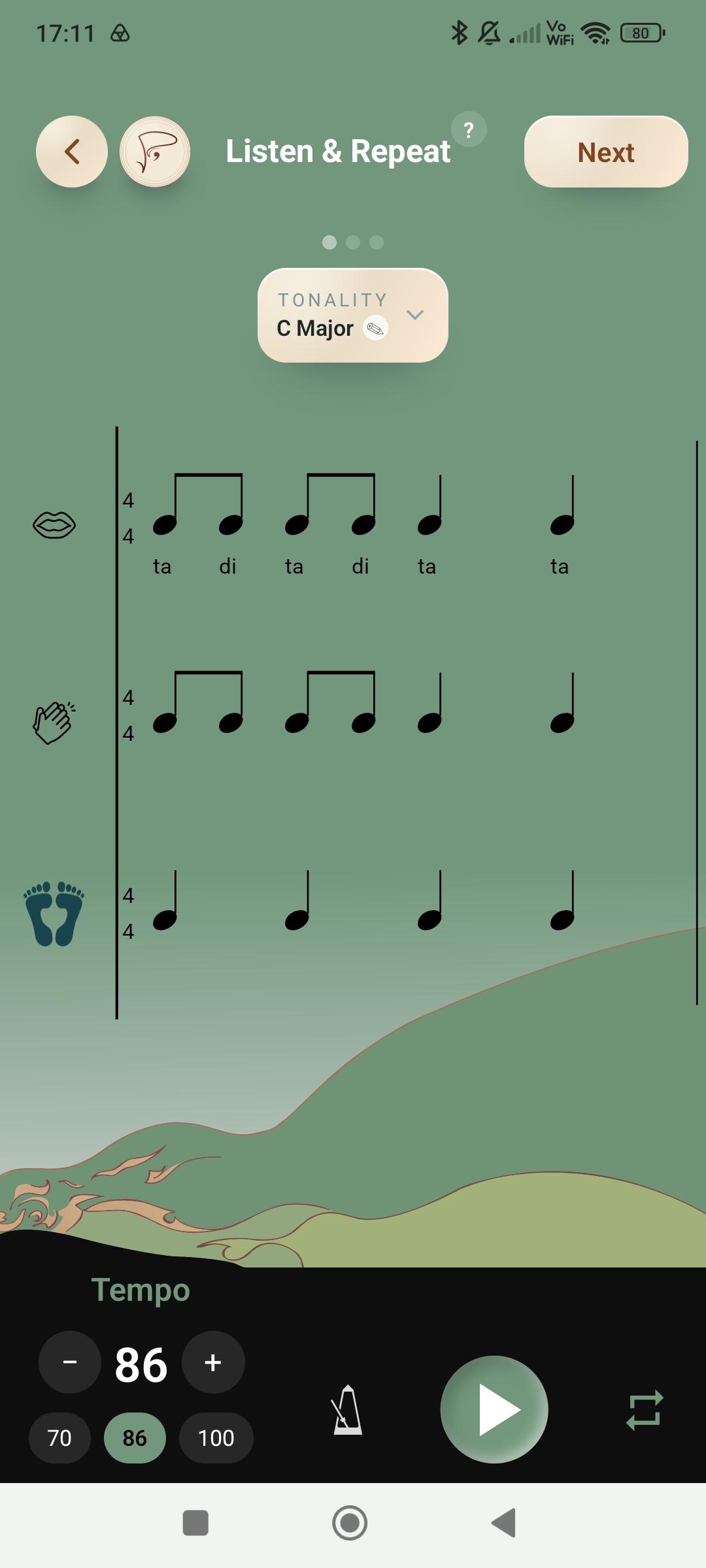
- ta pour les pulsations simples
- di pour les divisions de la pulsation
It helps you anticipate what comes next instead of only reacting.
keep a steady pulse
唱出音高
Singing requires precise listening.
The voice turns a heard rhythm into immediate action.
- hear a phrase before playing it
- recognise beat subdivisions
It makes the pulse and its subdivisions clearer.
节奏音节
Singing requires precise listening.
The voice turns a heard rhythm into immediate action.
It makes the pulse and its subdivisions clearer.
« ta-di ta »
It helps you anticipate what comes next instead of only reacting.
- hear a phrase before playing it
- keep a steady pulse
- recognise beat subdivisions
- remember rhythms for longer
remember rhythms for longer
保持运动
After learning to feel the pulse through movement, the next step comes naturally: give rhythm a voice.
The body feels time, walking steadies the pulse, and hand claps express rhythm. Singing connects what you feel with what you hear.
The voice turns a heard rhythm into immediate action.
It makes the pulse and its subdivisions clearer.
- la marche maintient la pulsation
- les frappes de mains expriment le rythme
- la voix relie le rythme à l’oreille
It helps you anticipate what comes next instead of only reacting.
keep a steady pulse
Listen and repeat
Singing requires precise listening.
The voice turns a heard rhythm into immediate action.
It helps you anticipate what comes next instead of only reacting.
Listen before singing
Singing requires precise listening.
It makes the pulse and its subdivisions clearer.
Feel before answering
The body feels time, walking steadies the pulse, and hand claps express rhythm. Singing connects what you feel with what you hear.
Sing simply
The voice turns a heard rhythm into immediate action.
It makes the pulse and its subdivisions clearer.
Compare and adjust
It helps you anticipate what comes next instead of only reacting.
remember rhythms for longer
Name the notes
Singing requires precise listening.
The voice turns a heard rhythm into immediate action.
It makes the pulse and its subdivisions clearer.
- hear a phrase before playing it
- keep a steady pulse
- recognise beat subdivisions
- remember rhythms for longer
It helps you anticipate what comes next instead of only reacting.
hear a phrase before playing it
- hear a phrase before playing it
- keep a steady pulse
- recognise beat subdivisions
- remember rhythms for longer
Tips for improving
Singing requires precise listening.
The voice turns a heard rhythm into immediate action.
- hear a phrase before playing it
- keep a steady pulse
- recognise beat subdivisions
- remember rhythms for longer
- Download Pulse and train your voice with guided rhythm and listening exercises.
It helps you anticipate what comes next instead of only reacting.
What singing prepares
Singing requires precise listening.
The voice turns a heard rhythm into immediate action.
It makes the pulse and its subdivisions clearer.
唱出节奏
hear a phrase before playing it
Compare and adjust
keep a steady pulse
唱出音高
recognise beat subdivisions
What this practice develops
Singing requires precise listening.
The voice turns a heard rhythm into immediate action.
- hear a phrase before playing it
- keep a steady pulse
- recognise beat subdivisions
- remember rhythms for longer
- Download Pulse and train your voice with guided rhythm and listening exercises.
- 唱出节奏,培养音乐听觉
It makes the pulse and its subdivisions clearer.
It helps you anticipate what comes next instead of only reacting.