
ステップ 2 / 4 — Pulseメソッド
リズムを歌い、音楽の耳を育てる
からだから声へ
動きを通して拍を感じることを学んだあと、自然に次の段階が現れます。それは、リズムに声を与えることです。
からだは時間を感じ、歩くことで拍が安定し、手拍子がリズムを表現します。歌うことは、感じることと聞くことを結びつける新しい次元を加えます。
声は私たちの最初の楽器です。楽器でメロディーを演奏する前に、内側で聞き、再現できる必要があります。
Pulseメソッドでは、歌うことはからだで感じたリズムと、楽器で奏でる音楽をつなぐ架け橋になります。
モバイルでは /pulse/download を開くとストアへ直接移動します。
なぜ歌うのか?
声は耳と動きを直接結びつける
楽器でメロディーを覚えるとき、多くの人は指で正しい音を探すことから始めます。しかし、動きの前には不可欠な段階があります。それは、音楽を内側で聞けることです。
歌うことは、耳とからだのつながりを育てるのに役立ちます。
歌えるメロディーは、すでに部分的に理解され、記憶されています。演奏者は楽器上で偶然の音を探すのではなく、何を出したいのかを知っています。
歌うことは、次のような基本的な能力を育てます。
- 音楽的記憶;
- 耳の正確さ;
- 音を先読みする力;
- 旋律の動きの理解。
音楽的フレーズを歌えるようになれば、思い出して演奏するのがはるかに容易になります。
Pulseでの歌:リズムと音程を感じる
Pulseでは、歌はリズムの練習だけにとどまりません。目的は、リズムと音程を伴って実際にメロディーを歌うことです。
演奏者は、次の2つの補完的な側面に取り組みます。
リズム
リズム音節は、さまざまな音符の長さを表すシンプルな言語を提供します。
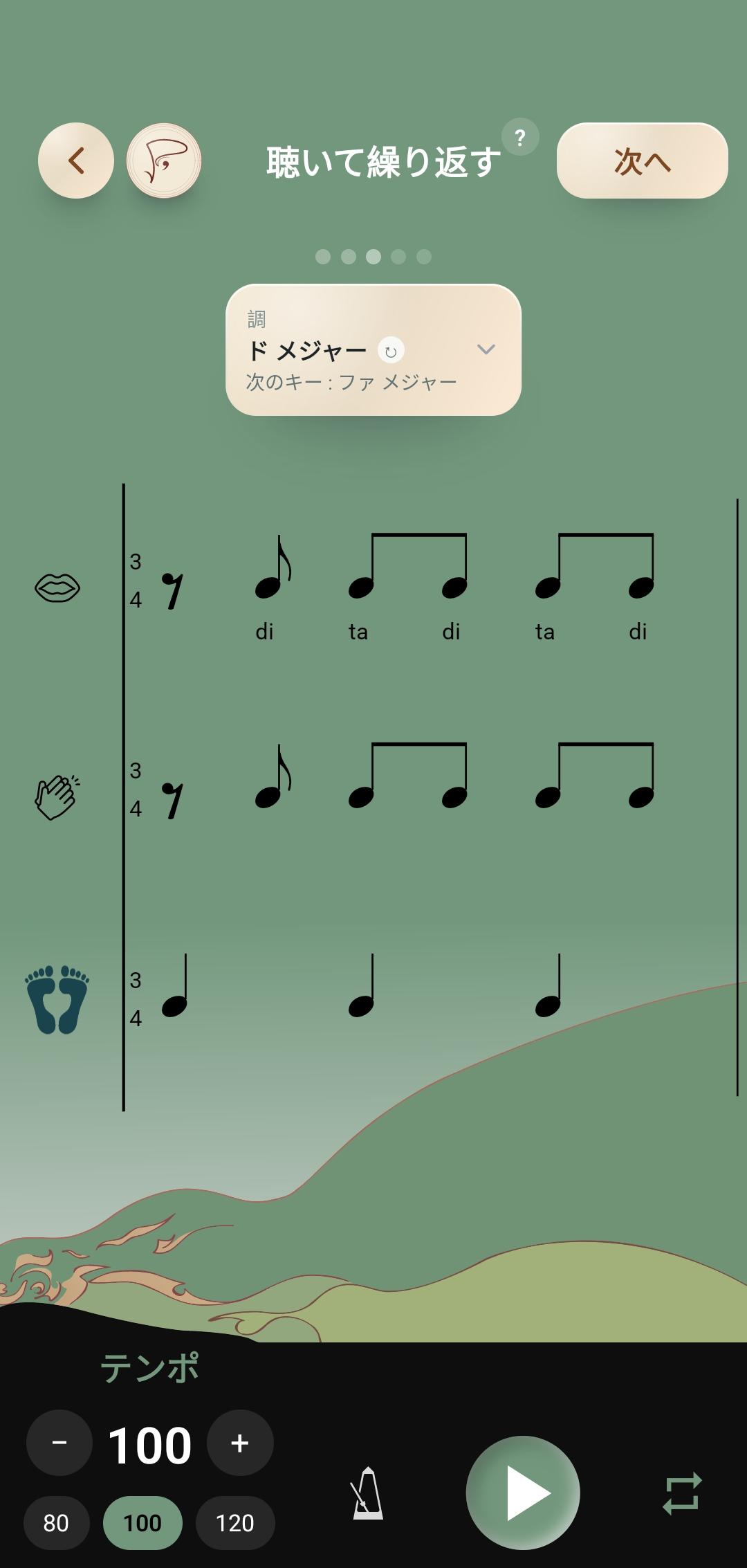
第1巻のエクササイズでは、主に次の音節を使います。
- 拍では ta;
- 裏拍では di。
理論的な読譜にすぐ進まなくても、リズムの動きを感じ、名前を付けられます。
リズムは、聞き、言い、感じられるものになります。
音程
同時に、メロディーは実際の音程で歌われます。
演奏者は、2つの重要な情報を調整することを学びます。
- 音がいつ来るべきか;
- どの音程であるべきか。
リズムとメロディーのこの結びつきは、あらゆる音楽実践の基盤です。音楽的フレーズは単なる音の並びではなく、時間の中の動きです。
なぜリズム音節を使うのか?
リズム音節は、リズムに言語を与えます。
楽譜を読む前、リズムの長さについて話す前でも、演奏者は聞いたことを感じ、表現できます。
例えば、
« ta-di ta »
と言うことは、リズムの動きをシンプルで即座に、そして音楽的に表します。これらの音節は、学習のいくつかの側面を支えます。
- リズムの記憶;
- 時間的な組織の識別;
- リズムのアイデアの伝達;
- 聴取と動きのよりよい結びつけ。
楽譜の読み取りに代わるものではありませんが、感覚と理解の間の架け橋を作ります。
なぜ歩き続け、手拍子を続けるのか?
歌を加えると、声だけに集中するためにからだの動きを止めた方が楽に感じるかもしれません。
しかし、これらの要素を保つことこそが、このエクササイズを特に効果的にします。
音楽実践では、リズム、メロディー、動きは決して完全に分離されません。
Pulseのエクササイズでは:
- 歩くことで拍を保ち、からだを時間と結びつけます;
- 手拍子がリズム構造を表現します;
- 声が耳とメロディーを育てます。
この協調は、楽器演奏やアンサンブルで必要になる、複数のことを同時に行う力を育てます。
注意がメロディーに移っても、からだは基準として残ります。
声で聞いて繰り返す
ボディパーカッションのエクササイズと同様、作業は常に聴くことから始まります。
目的は、アプリに合わせて歌うことだけではなく、本物の内的聴取を育てることです。
プロセスは次の段階に従います。
聞く
演奏者はメロディー、そのリズム、動き、構造を発見します。
歌う前に、聞く時間を取ります。
感じる
メロディーは内的な形を帯び始めます。リズム、音程、動きが徐々に身近になります。
歌う
声は、耳が理解したことを表現します。
目的は、すぐに完璧な演奏をすることではなく、歌う内容を聞く内容に少しずつ近づけることです。
比較して調整する
モデルを聞くことで、違いを見つけ、知覚を少しずつ洗練できます。
繰り返すたびに、耳が育ちます。
さらに進む:音名を言う
耳の訓練を深めたい演奏者には、追加の段階があります。メロディーの音を特定してみることです。
Pulseでは、表示される楽譜はリズムだけを示します。音程は書かれておらず、能動的な聴取を促します。
演奏者は次のことを試せます。
- メロディーを聞く;
- 耳で音を見つける;
- 音名を使って歌う;
- その後、楽器で確認する。
このエクササイズは、耳コピーの第一歩です。
徐々に次の能力が育ちます。
- 相対音感;
- 音程の認識;
- 旋律の動きへの意識;
- 楽譜なしでメロディーを思い出す力。
よくある間違い
音だけに集中する
正しい音程を歌うことだけを優先し、リズムを忘れがちです。
しかしメロディーは、時間の中での位置と切り離せません。拍はからだの中で生き続ける必要があります。
歌いやすくするために歩くのをやめる
歌が難しくなると、歩くリズムを失う反射が起こります。
しかし、まさにその瞬間にからだが最も役立ちます。声が働いている間、安定を保つのです。
すぐに完璧を求める
第一の目的は、聴取を育てることです。
少し外れた音や不完全なリズムも、脳が学ぶための情報です。
音を見つけるのを急ぎすぎる
音の特定は上級の段階です。音に名前を付ける前に、まず聞くことを学ぶ必要があります。
練習のヒント
短時間でも定期的に練習する方が、たまに長時間練習するより効果的なことが多いです。
上達するには:
- 歌う前に何度も聞く;
- 自然な歩きを保つ;
- ゆっくり始める;
- 難しい部分だけを繰り返す;
- アプリなしで歌い、本当に覚えているか確かめる。
目的はエクササイズを成功させることだけでなく、より注意深く、より自立した耳を育てることです。
このステップが準備するもの
歌うことは、からだの感覚と楽器演奏の間の不可欠な段階です。
リズムを感じ、メロディーを歌える演奏者は、すでに音楽の内的イメージを持っています。楽器は、耳の中にすでにあるものを表現する手段になります。
このステップは、自然に次の準備をします。
楽器での耳コピ
メロディーは、内側ですでに聞こえていれば、見つけやすくなります。
即興
旋律の動きを聞ける演奏者は、より自由に創作し、自分の言語を育てられます。
解釈
耳、からだ、楽器の結びつきが強まると、より正確で表現豊かに演奏できます。
このエクササイズが育てるもの
これらのエクササイズを歌うとき、メロディーだけを練習しているわけではありません。
あらゆる音楽実践に不可欠な能力を育てています。
- 耳とからだの結びつけ;
- 音楽的フレーズの記憶;
- リズムとメロディーの関係の感覚;
- 音の先読み;
- 相対音感の発達;
- 楽器への移行の準備。
歌うことは、聞いた音楽を内なる音楽に変えます。
演奏する前に聞くこの能力こそが、より自由で、正確で、創造的な演奏を可能にします。