
Krok 2 / 4 — Metoda Pulse
Śpiewaj rytm i rozwijaj swój słuch muzyczny
Od ciała do głosu
Po nauczeniu się wyczuwać pulsację przez ruch naturalnie pojawia się kolejny krok: nadanie rytmowi głosu.
Ciało pomaga poczuć czas, chodzenie stabilizuje pulsację, a klaskanie wyraża rytm. Śpiew dodaje nowy wymiar: łączy to, co czujesz, z tym, co słyszysz.
Głos to nasz pierwszy instrument. Zanim zagrasz melodię na instrumencie, musisz umieć usłyszeć ją wewnętrznie i odtworzyć.
W metodzie Pulse śpiew staje się mostem między rytmem odczuwanym ciałem a muzyką grana na instrumencie.
Na telefonie otwórz /pulse/download, aby przejść prosto do sklepu.
Dlaczego śpiewać?
Głos tworzy bezpośrednie połączenie między uchem a gestem
Gdy muzyk uczy się melodii na instrumencie, często od razu szuka właściwych nut palcami. Tymczasem przed gestem stoi kluczowy krok: umieć usłyszeć muzykę wewnętrznie.
Śpiew pomaga rozwijać to połączenie między uchem a ciałem.
Melodia, którą potrafisz zaśpiewać, jest już częściowo zrozumiana i zapamiętana. Muzyk nie szuka już przypadkowych dźwięków na instrumencie: wie, co chce wyrazić.
Śpiew rozwija zatem kilka fundamentalnych umiejętności:
- pamięć muzyczną;
- precyzję słuchu;
- zdolność do przewidywania dźwięków;
- zrozumienie ruchu melodycznego.
Jeśli frazę muzyczną można zaśpiewać, znacznie łatwiej jest ją sobie przypomnieć i zagrać.
Śpiew w Pulse: poczuj rytm i wysokości
W Pulse śpiew nie ogranicza się do pracy rytmicznej. Celem jest faktyczne śpiewanie melodii wraz z jej rytmem i wysokościami.
Muzyk pracuje zatem nad dwoma uzupełniającymi się wymiarami:
Rytm
Sylaby rytmiczne dają prosty język do różnych długości nut.
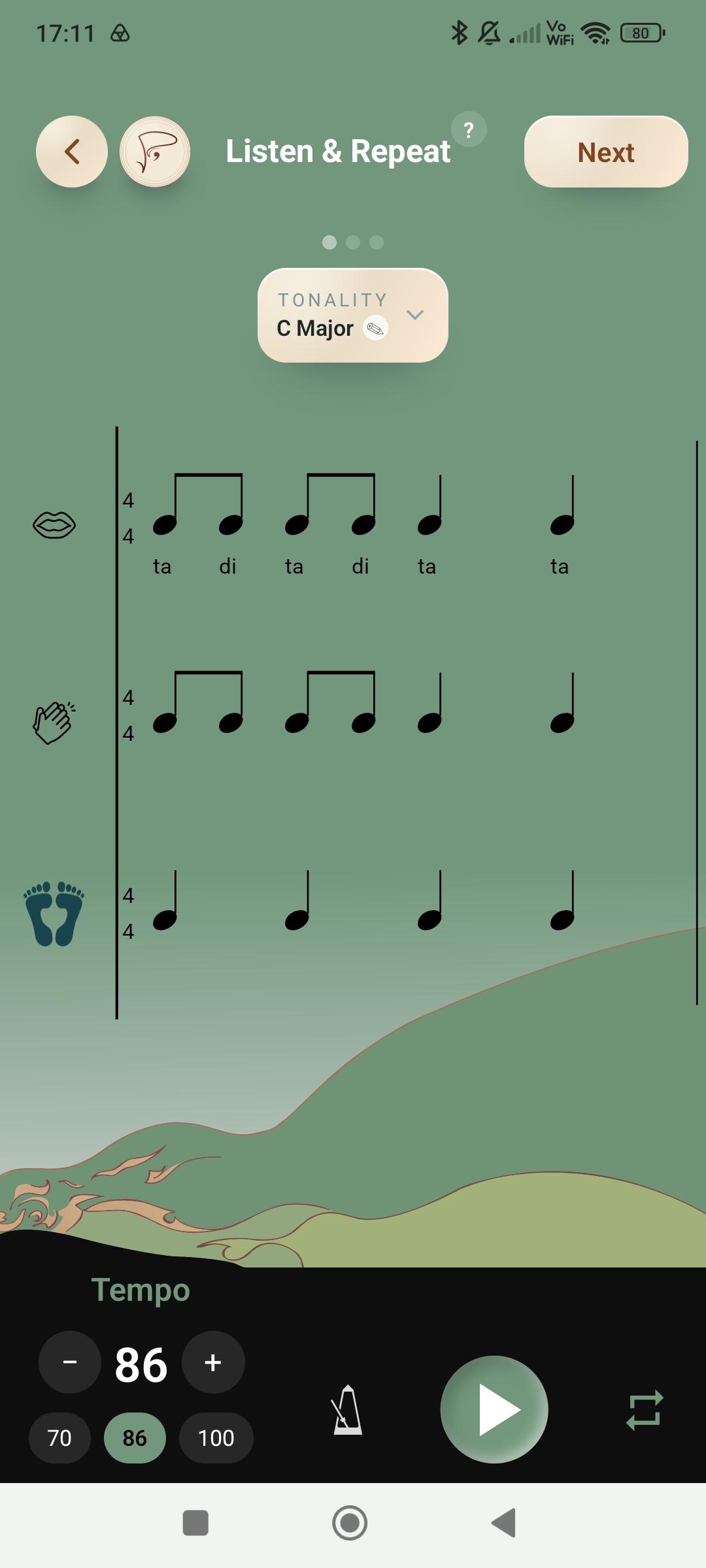
W pierwszym tomie ćwiczenia korzystają głównie z sylab:
- ta na uderzeniach;
- di na przeciwnych uderzeniach.
Pozwalają poczuć i nazwać ruchy rytmiczne bez konieczności od razu sięgać po teorię.
Rytm staje się czymś, co można usłyszeć, powiedzieć i poczuć.
Wysokość
Jednocześnie melodia jest śpiewana z właściwymi nutami.
Muzyk uczy się zatem koordynować dwie istotne informacje:
- kiedy powinien pojawić się dźwięk;
- jaką wysokość powinien mieć.
To powiązanie między rytmem a melodią jest fundamentalne w każdej praktyce muzycznej. Fraza muzyczna to nie tylko ciąg nut: to ruch w czasie.
Dlaczego używać sylab rytmicznych?
Sylaby rytmiczne nadają rytmowi język.
Jeszcze przed czytaniem nut czy mówieniem o wartościach rytmicznych muzyk może poczuć i wyrazić to, co słyszy.
Powiedzenie:
« ta-di ta »
przedstawia ruch rytmiczny w prosty, bezpośredni i muzyczny sposób. Sylaby te wspierają kilka aspektów nauki:
- zapamiętywanie rytmu;
- rozpoznawanie organizacji czasowej;
- komunikowanie idei rytmicznej;
- lepsze łączenie słuchu z ruchem.
Nie zastępują czytania nut, lecz tworzą most między odczuciem a zrozumieniem.
Dlaczego nadal chodzić i klaskać?
Gdy dodajesz śpiew, może wydawać się łatwiej przestać poruszać ciałem, aby skupić się wyłącznie na głosie.
To właśnie utrzymanie tych elementów sprawia, że ćwiczenie jest szczególnie skuteczne.
W praktyce muzycznej rytm, melodia i ruch nigdy nie są całkowicie oddzielone.
W ćwiczeniach Pulse:
- chodzenie utrzymuje pulsację i łączy ciało z czasem;
- klaskanie wyraża strukturę rytmiczną;
- głos rozwija słuch i melodię.
Ta koordynacja uczy muzyka robić kilka rzeczy naraz, tak jak będzie musiał przy grze na instrumencie lub w grupie.
Ciało pozostaje zatem punktem odniesienia, nawet gdy uwaga przesuwa się na melodię.
Słuchaj i powtarzaj głosem
Podobnie jak w ćwiczeniach perkusji ciała, praca zawsze zaczyna się od słuchania.
Celem nie jest po prostu śpiewanie razem z aplikacją, lecz rozwijanie prawdziwego wewnętrznego słuchu.
Proces obejmuje kilka etapów:
Słuchaj
Muzyk odkrywa melodię, jej rytm, ruchy i strukturę.
Zanim zacznie śpiewać, poświęca czas na wysłuchanie.
Poczuj
Melodia zaczyna nabierać wewnętrznego kształtu. Rytm, wysokości i ruchy stopniowo stają się bardziej znajome.
Śpiewaj
Głos tłumaczy to, co ucho zrozumiało.
Celem nie jest od razu idealne wykonanie, lecz stopniowe zbliżenie tego, co śpiewasz, do tego, co słyszysz.
Porównuj i koryguj
Słuchanie wzorca pomaga dostrzec różnice i stopniowo udoskonalać percepcję.
Każde powtórzenie rozwija słuch.
Pójść dalej: nazywanie nut
Dla muzyków, którzy chcą pogłębić trening słuchu, możliwy jest dodatkowy krok: próba rozpoznania nut melodii.
W Pulse wyświetlana partytura pokazuje tylko wymiar rytmiczny. Wysokości nie są zapisane, aby zachęcić do aktywnego słuchania.
Muzyk może wtedy spróbować:
- wysłuchać melodii;
- znaleźć nuty na słuch;
- zaśpiewać je, używając ich nazw;
- następnie sprawdzić na instrumencie.
To ćwiczenie jest pierwszym podejściem do gry na słuch.
Stopniowo rozwija:
- słuch względny;
- rozpoznawanie interwałów;
- świadomość ruchu melodycznego;
- zdolność do przypomnienia sobie melodii bez partytury.
Częste błędy
Skupianie się wyłącznie na nutach
Często staramy się przede wszystkim zaśpiewać właściwe wysokości i zapominamy o rytmie.
Tymczasem melodia jest nierozerwalna z jej umiejscowieniem w czasie. Pulsacja musi nadal żyć w ciele.
Zatrzymywanie chodzenia, aby lepiej śpiewać
Gdy śpiew staje się trudniejszy, odruchem może być utrata rytmu chodzenia.
To właśnie w takich momentach ciało jest najbardziej użyteczne: utrzymuje stabilność, gdy pracuje głos.
Dążenie do natychmiastowej perfekcji
Głównym celem jest rozwijanie słuchu.
Lekko fałszywa nuta lub niedoskonały rytm to informacja, która pomaga mózgowi się uczyć.
Zbyt szybkie szukanie nut
Identyfikowanie nut to zaawansowany krok. Zanim nazwiesz dźwięk, musisz najpierw nauczyć się go słyszeć.
Wskazówki do ćwiczeń
Kilka regularnych minut często jest skuteczniejszych niż jedna długa, okazjonalna sesja.
Aby robić postępy:
- słuchaj kilka razy, zanim zaczniesz śpiewać;
- utrzymuj naturalny chód;
- zaczynaj powoli;
- powtarzaj trudne fragmenty osobno;
- spróbuj śpiewać bez aplikacji, aby sprawdzić, co naprawdę zapamiętałeś.
Celem nie jest tylko ukończenie ćwiczenia, lecz rozwijanie bardziej uważnego i samodzielnego słuchu.
Do czego przygotowuje ten krok
Śpiew to kluczowy etap między cielesnym odczuciem a grą na instrumencie.
Gdy muzyk potrafi poczuć rytm i zaśpiewać melodię, ma już wewnętrzną reprezentację muzyki. Instrument staje się wtedy sposobem wyrażenia tego, co już istnieje w uchu.
Ten krok naturalnie przygotowuje do:
Gry na słuch na instrumencie
Odnalezienie melodii staje się łatwiejsze, gdy jest już usłyszana wewnętrznie.
Improwizacji
Muzyk, który słyszy ruchy melodyczne, może tworzyć swobodniej i rozwijać własny język.
Interpretacji
Silniejsze połączenie między uchem, ciałem a instrumentem pozwala grać z większą precyzją i ekspresją.
Co ma rozwijać to ćwiczenie
Gdy śpiewasz te ćwiczenia, nie pracujesz nad samą melodią.
Rozwijasz umiejętności niezbędne w każdej praktyce muzycznej:
- łączenie ucha z ciałem;
- zapamiętywanie frazy muzycznej;
- odczuwanie relacji między rytmem a melodią;
- przewidywanie dźwięków;
- rozwijanie słuchu względnego;
- przygotowanie do przejścia na instrument.
Śpiew zamienia usłyszaną muzykę w muzykę wewnętrzną.
To właśnie zdolność słyszenia przed grą umożliwia później granie z większą swobodą, precyzją i kreatywnością.