
Step 1 — Pulse method
Feel the rhythm and develop your internal pulse
Rhythm is not only counted — it is felt
Before you can play a rhythm accurately, you must first be able to feel it. That sense of time — the pulse that keeps going even when the music stops — is what lets you stay steady, play with other musicians, and keep tempo naturally.
The Pulse method uses a progressive approach that combines body movement, listening, and independent practice. By walking, clapping rhythms, then learning to keep them without outside help, musicians gradually turn rhythm into a physical sensation.
This first step is the foundation for everything else. A solid pulse then makes singing, picking up lines on your instrument, improvising, and all musical practice easier.
On mobile, use the Download link for a direct store redirect.
Why start with the body?
When we learn rhythm, we often try to understand before we feel. We count the beats, follow a metronome, and try to place every hit in the right place. Those tools are useful and part of learning, but they do not always build real inner stability.
Many musicians find they can play correctly with a metronome or accompaniment, yet lose their place as soon as it disappears. Rhythm is then guided only by an external reference, without being truly integrated.
The Pulse method chooses another starting point: before analysing a rhythm, you need to be able to feel it.
Rhythm is not only a sequence of durations to memorise. It is a movement — a sense of regularity and balance that must gradually find its place in the body.
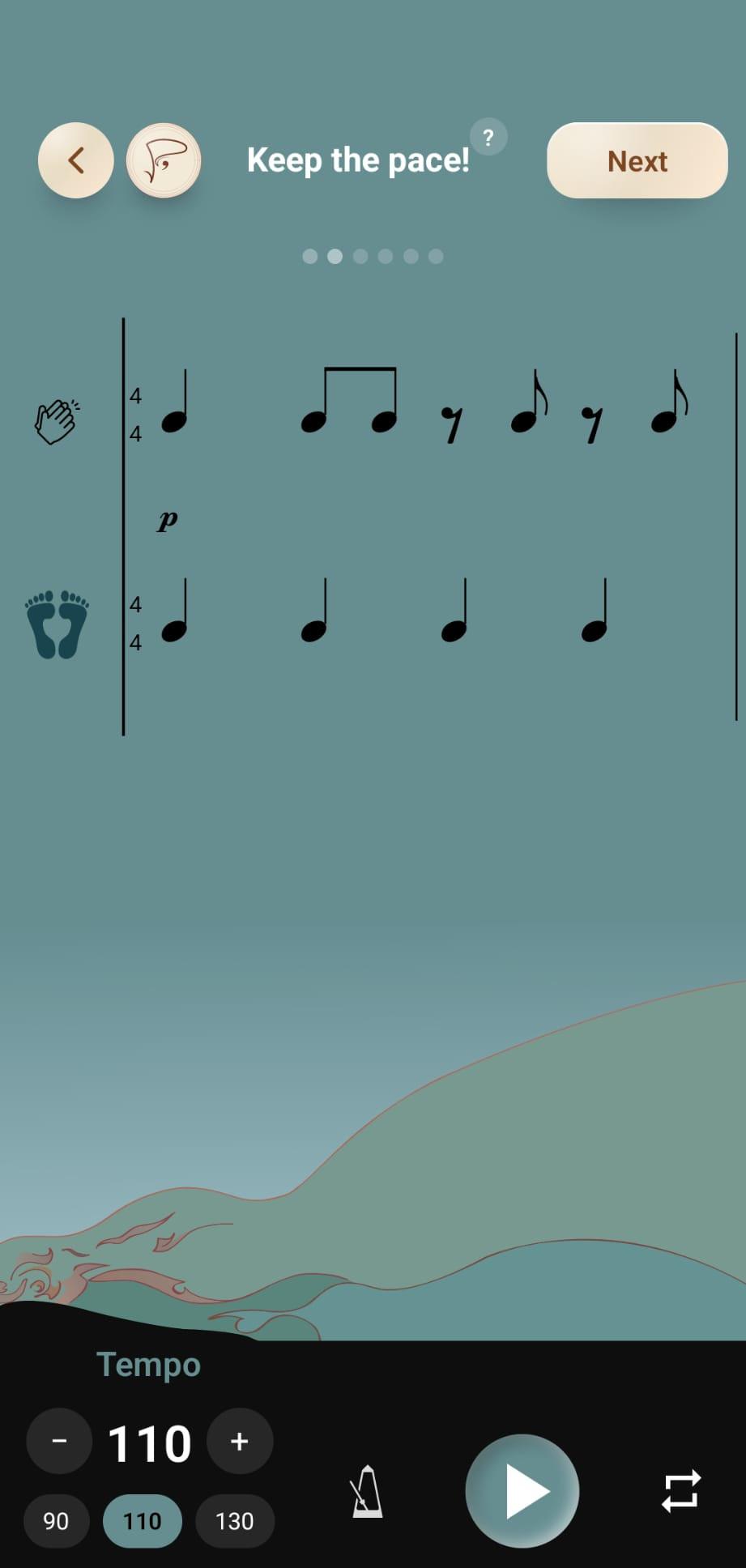
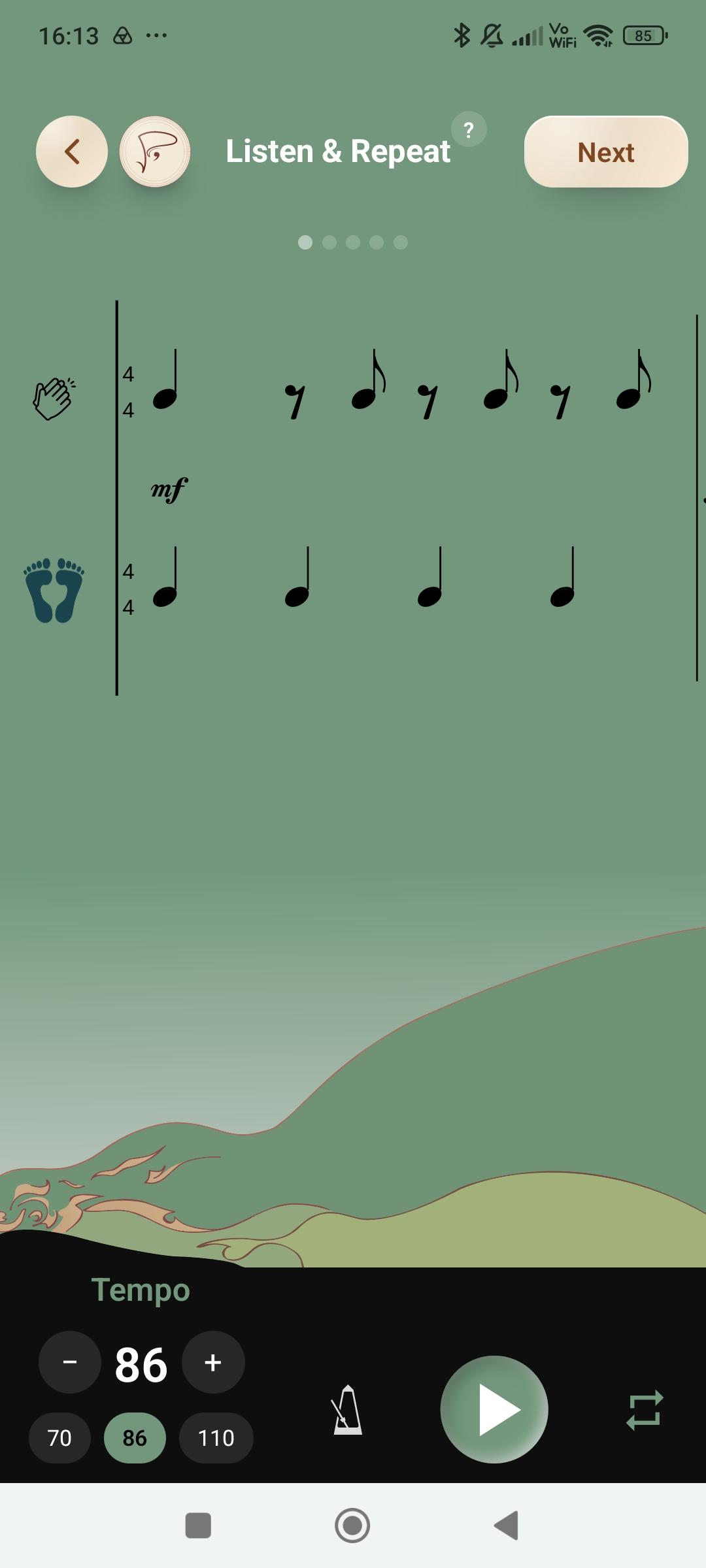
That is why the first exercises use body percussion. By walking the pulse and clapping rhythms with the hands, musicians create a direct link between body, ear, and music.
The pulse is no longer only something you hear: it becomes something you feel.
This bodily foundation then makes it easier to approach singing, instrumental playing, improvisation, and the other skills developed in Pulse.
Movement as a temporal reference
Musical time is an abstract idea. You can count it, read it, or analyse it, but to truly master it you also need to feel it.
That is the role of body percussion in the Pulse method: giving the body an active place in learning rhythm.
By combining walking, hand claps, and musical listening, the body becomes a stable landmark that helps you feel the pulse and understand the structure of the rhythm.
Why walk?
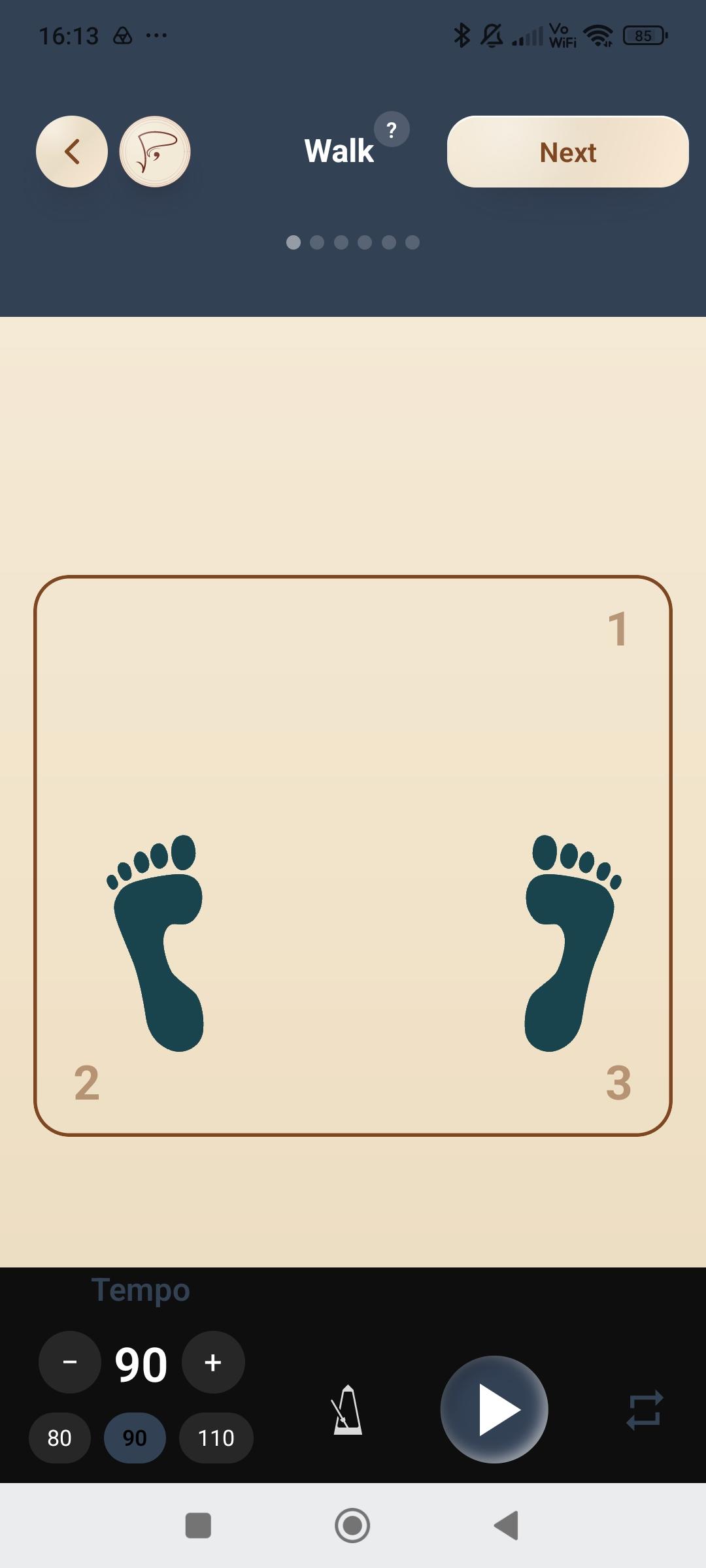
Walking is one of the most natural and regular movements of the human body. Each step creates a simple, stable landmark that helps you internalise the pulse without having to calculate it.
In Pulse exercises, walking in tempo keeps movement continuous and helps you always know where you are in the music.
Instead of consciously asking: “Where am I in the bar?” “Is this beat one or beat three?”
the body gradually learns to recognise its position naturally.
With practice, musicians develop an inner sense of the bar. They know where they are without constantly counting.
Why clap?
Walking installs the pulse. Hand claps then add the rhythm.
By making rhythms with the hands while keeping a steady walk, musicians learn to coordinate several layers at once: holding time while expressing a rhythmic phrase.
That ability is at the heart of musical practice. A drummer, guitarist, pianist, or singer must constantly keep a stable pulse while doing something else on top.
The goal is therefore not only to reproduce a rhythm, but to stay connected to time while creating movement.
The body becomes the metronome
An external metronome shows where the beat is. Body work teaches musicians to keep that reference themselves.
When the pulse is integrated physically, it becomes more stable and natural. The body keeps carrying the tempo even when attention focuses on other musical elements.
That autonomy is essential for playing with others, improvising, or interpreting a melody with freedom.
A musician who truly feels the pulse no longer only follows time — they can play with it.