
Feature — Pulse
Learn together: share your music with Pulse groups
Music is often practiced alone.
You work on an exercise, repeat a rhythm, search for a melody, record an improvisation to observe your progress.
But music is above all a language that takes on its full meaning when it is shared.
Listening to others, receiving feedback, discovering different ways to interpret the same exercise, or working with a teacher are all opportunities to progress.
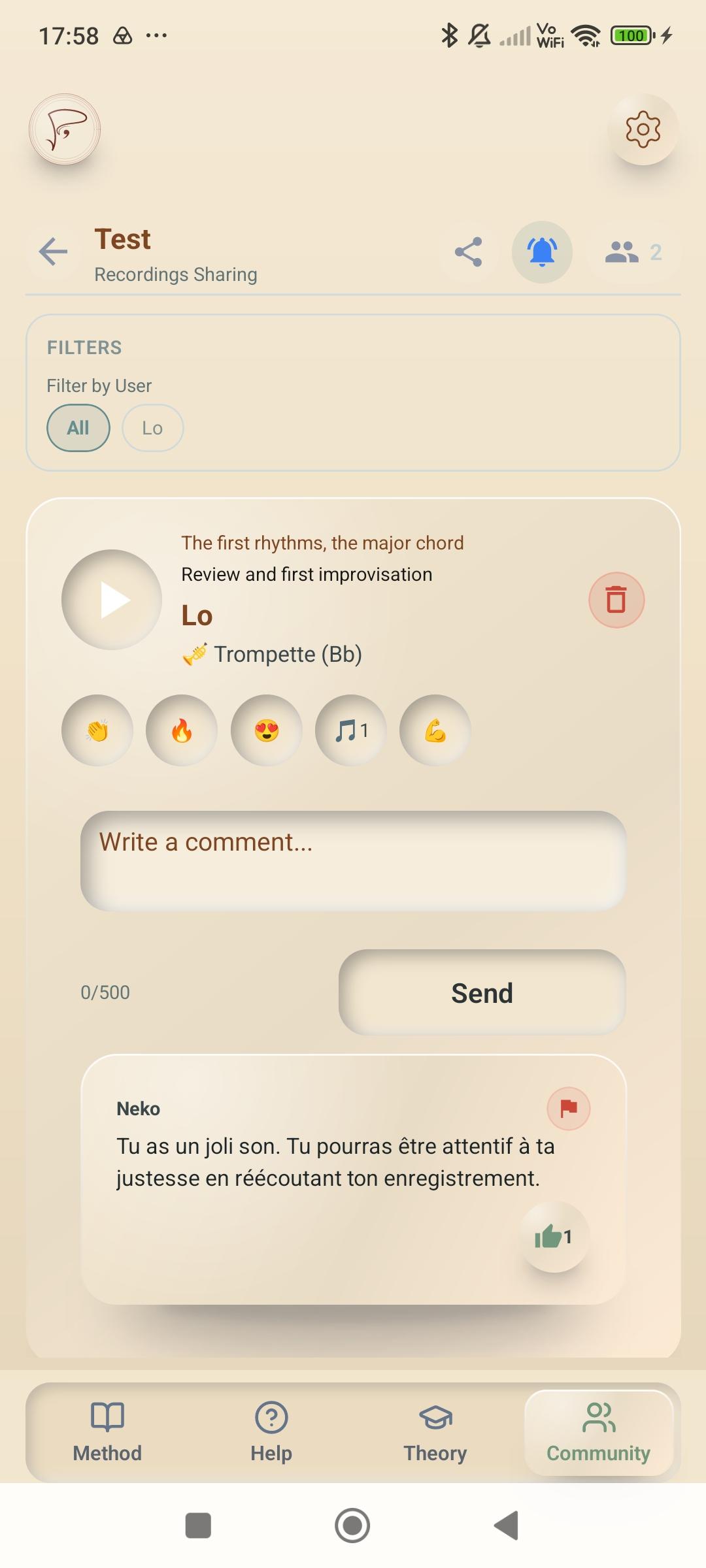
Pulse groups were designed to extend this collective learning, while letting everyone choose who they want to share their music with.
On mobile, use the Download link for a direct store redirect.
Learning with others
Every musician progresses at their own pace.
Some enjoy sharing their creations with a wide community and discovering other musicians' interpretations.
Others prefer working in a more personal setting, with their teacher or their music group.
Pulse groups make it possible to create these different learning spaces.
A group can represent:
- a music class;
- a teacher and their students;
- a band of musicians;
- a school;
- an association;
- a circle of friends who want to progress together.
Every musician can join several groups and take part in different spaces according to their needs.
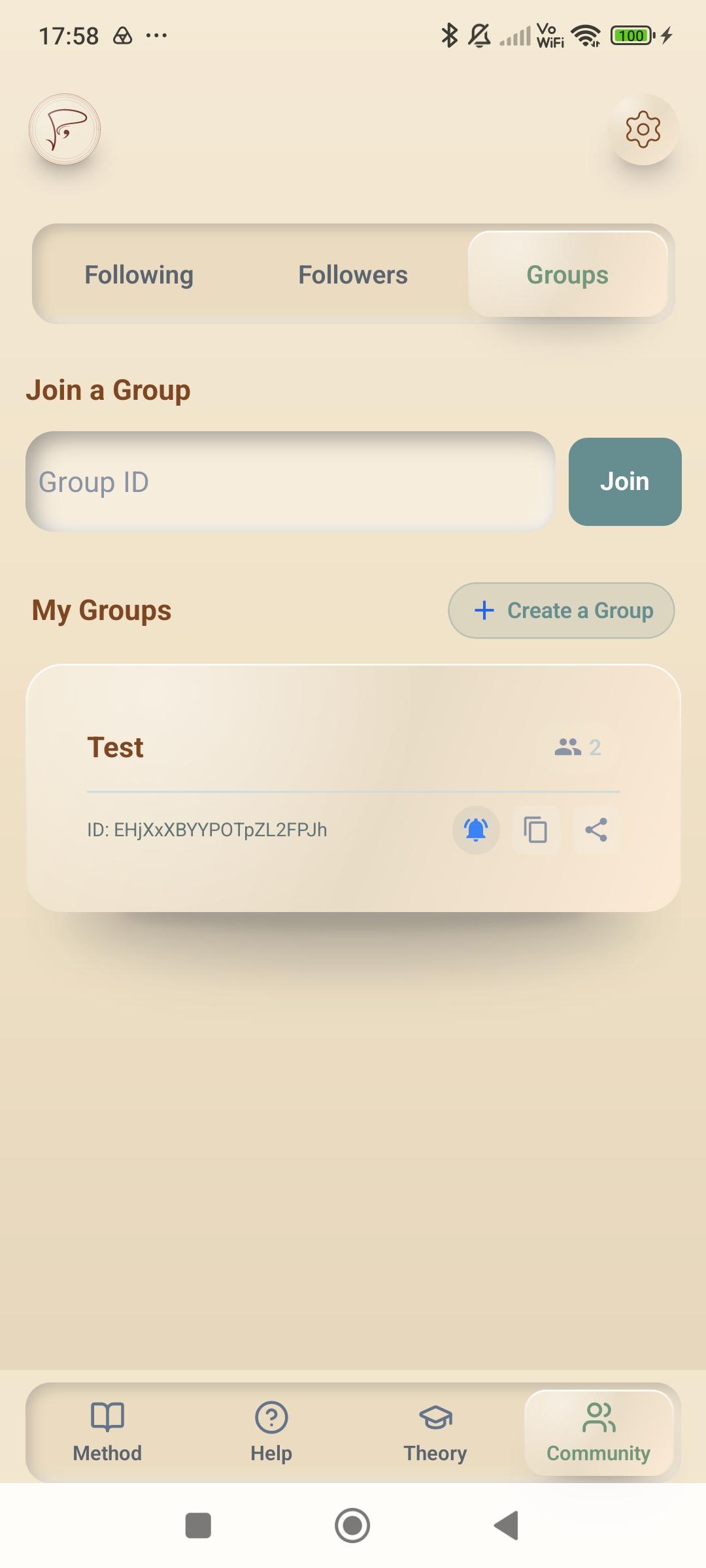
Create your sharing environment
In Pulse, sharing is never imposed.
Every musician keeps control of their creations and chooses where and with whom to share their improvisations.
When an improvisation is recorded, several options are available.
Share with the whole Pulse community
Sharing an improvisation with the whole community lets other musicians discover your work.
It is an opportunity to:
- receive encouragement;
- discover other interpretations;
- inspire other users;
- take part in a collective dynamic.
Each improvisation becomes a new way of bringing music to life.
Share with selected groups
An improvisation can also be shared only with selected groups.
For example:
- share your work with your teacher;
- send an improvisation to your class;
- exchange with your music group;
- take part in a collective workshop.
This makes it possible to create spaces suited to each learning situation.
Choose the visibility level in a group
Within each group, sharing can also be adapted.
An improvisation can be:
- accessible to all group members;
- visible only to the group owner.
This second option is especially useful in a teaching context.
A student can, for example, send an improvisation only to their teacher for personalized feedback before sharing it with the rest of the class.
Sharing thus becomes a gradual step, adapted to each person's level of confidence and goals.
Receive feedback to progress
Sharing an improvisation is not simply about showing what you can do.
It is also a way of learning.
Outside feedback often helps you hear your music differently.
Comments can help you:
- identify a strength;
- understand a difficulty;
- find a new direction to work on;
- feel encouraged in your progress.
The goal is not to grade or compare musicians.
Each improvisation is a step in a learning journey.
The Pulse community is designed as a space for exchange where everyone can progress at their own pace.
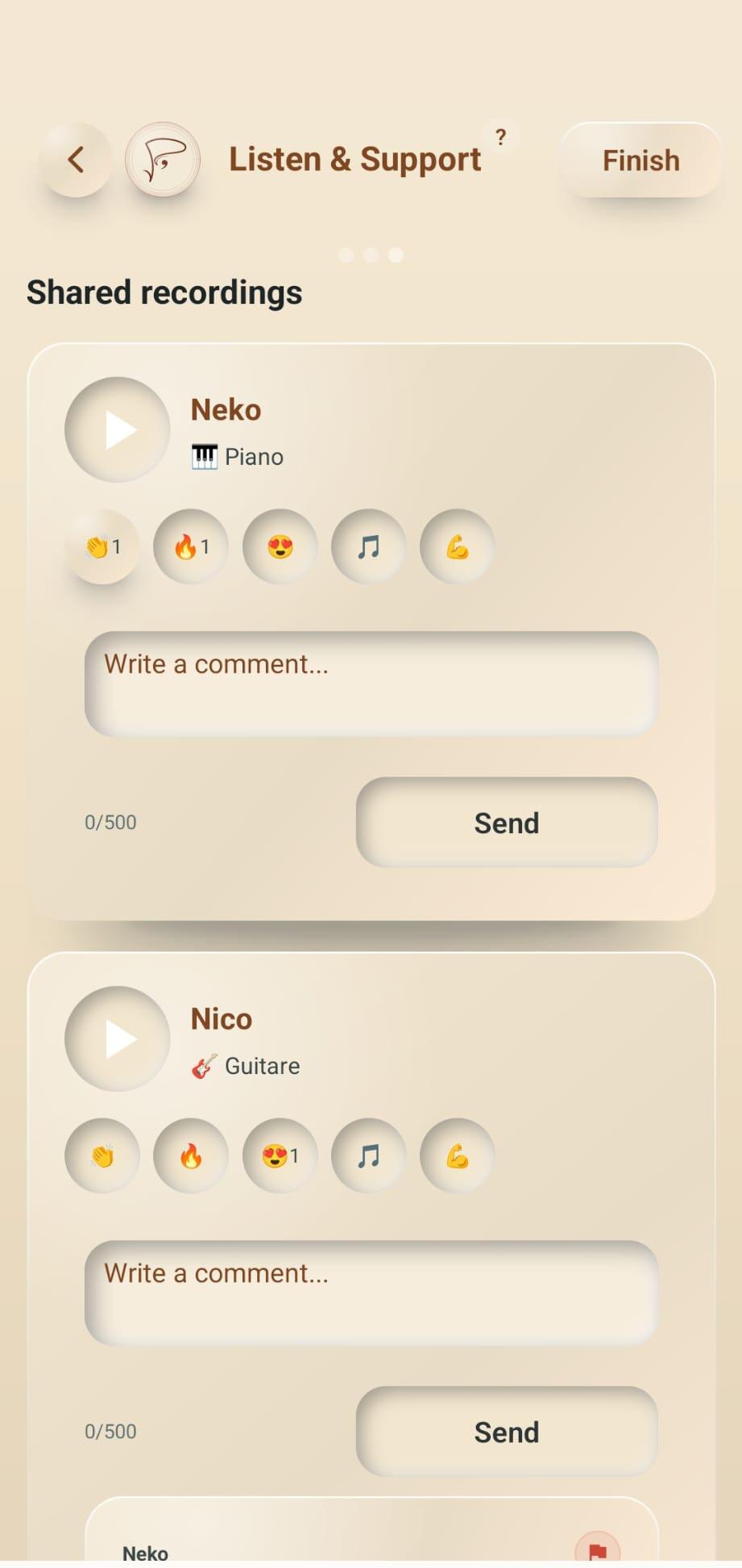
Learn by listening to others
Listening is an essential part of musical learning.
By discovering other musicians' improvisations, you develop your ear and discover new possibilities.
The same exercise can give rise to very different interpretations.
You can observe:
- different ways of building a phrase;
- different rhythmic choices;
- different ways of using the notes;
- different musical intentions.
Listening to others also helps you find new ideas.
An interesting phrase can become the starting point for a new ear-training exercise.
A rhythmic choice can inspire a new improvisation.
Each musician thus becomes a source of learning for others.
Keep progressing between lessons
For teachers, Pulse groups make it possible to extend the work beyond the time spent together.
A music lesson is often a privileged moment, but progress is built mainly through regular practice between sessions.
Thanks to groups, a teacher can:
- follow their students' improvisations;
- observe their development;
- encourage their progress;
- suggest directions for work.
Students can keep practicing, share their attempts, and stay connected to their learning throughout the week.
Musical work no longer stops when the lesson ends.
A living musical library
Over time, a group becomes a collective memory.
You can find again:
- your first improvisations;
- developments over the months;
- different interpretations of the same exercise;
- ideas shared by other members.
This library helps you become aware of the path traveled.
Relistening to an old improvisation often reveals progress that goes unnoticed day to day.
Share at the right time
Sharing your music should not become pressure.
Every musician can choose the moment that suits them.
You can:
- record a first version only for yourself;
- ask your teacher for feedback;
- rework a passage;
- then share it with your group;
- and eventually open your improvisation to the whole community.
Sharing becomes a natural step in learning, not an obligation.
Music grows through exchange
Musical progress is not built only facing your instrument.
It is nourished by listening, dialogue, and shared experiences.
With Pulse groups, every musician can create their own learning environment:
- work with a teacher;
- progress with a class;
- exchange with their group;
- discover the community's creations.
Because learning music also means learning to listen, to share, and to play with others.